Paper Mill
Paper Mill
These days, we buy paper by the ream—500 sheets at a time, if necessary. But 200 years ago, making paper was still quite a chore. And it required a lot of water.
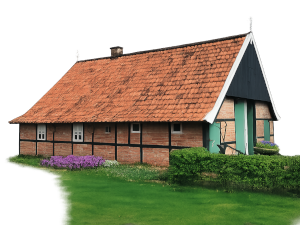
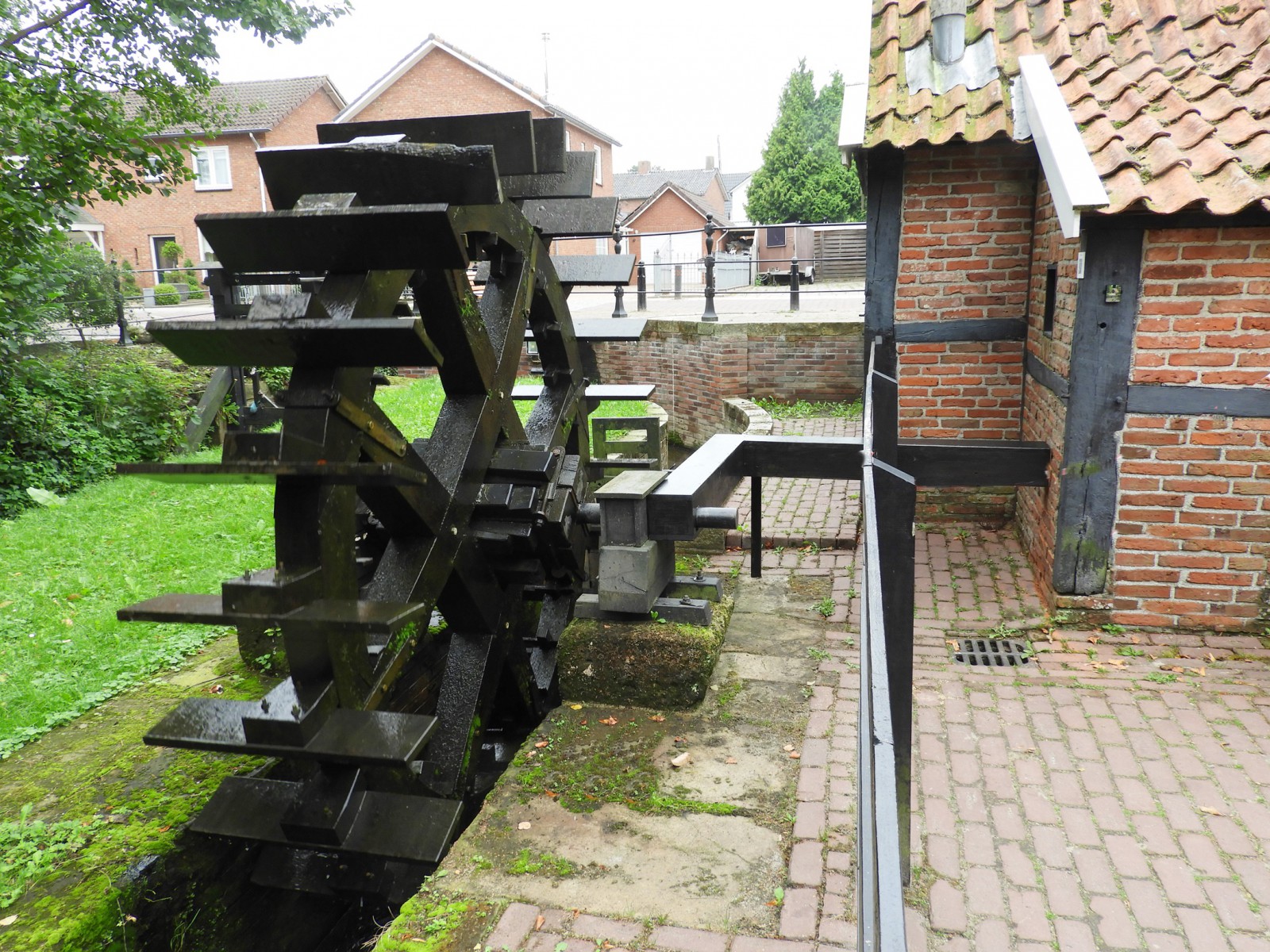
The little building you see here is a scaled-down version of the watermill that used to stand next to the Molenhuisje. The only difference is that grain was ground there. Here, we show how paper used to be made.
It wasn’t made from wood, as is usually the case today, but from old rags. Worn-out clothing and other textiles were given a second life this way. Although no one back then would have called it recycling.
The rags were cut into small pieces and then pounded into a pulp with heavy wooden hammers. Fortunately, the papermaker didn’t have to operate those hammers himself. The watermill did that for him.
The flowing water set the waterwheel in motion. Through an ingenious mechanism, this power drove the heavy hammers, which pounded the rags into paper pulp.
From a vat containing this pulp, the papermaker used a special frame to scoop out a thin layer of fibers. That wet sheet was placed on felt, pressed, and then dried. And so, sheet by sheet, paper was created.
Papermaking was once an important craft in this area as well. In the Springendal, Bailiff Van Heiden-Hompesch, who lived at the Commanderie in Ootmarsum, owned no fewer than five paper mills.
Back then, water wasn’t just something to drink or to irrigate the land. It also provided the power to drive machines—without electricity, without motors. Just flowing water and a cleverly devised mechanism.
And when you consider how much paper has passed through our hands since then, it’s actually remarkable that it all began this way: with old rags, water, and a great deal of patience.