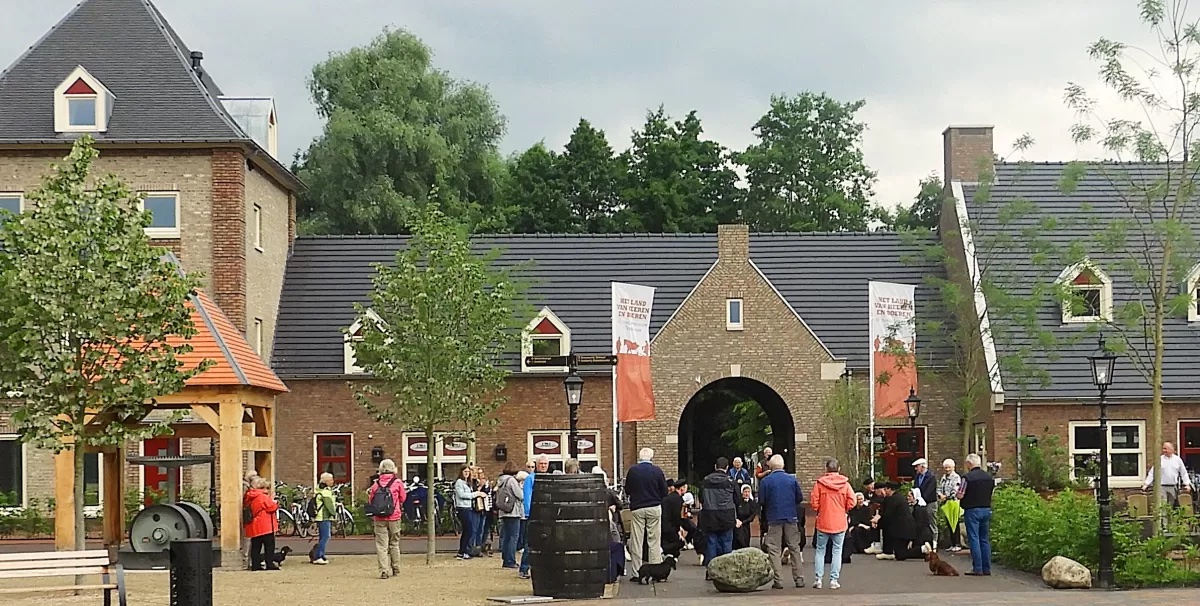
Welcome to the Ootmarsum Open-Air Museum. To help you find your way around our museum grounds,
please use this page on our website. Here youâll find a map featuring images of the 22 buildings.
Clicking on a building will display a description of that building, which you can also play if you wish.
Below each description, there are usually a few small clickable photos. Additional stories and videos will then play.
Your current location on the grounds is marked with a blue circle. Due to the many trees on our grounds, there is often a significant deviation in the GPS reading.
The greater the deviation, the larger the blue circle. If the location is accurate enough and you are close to one of the buildings, that building will be selected. The corresponding text is read aloud. You can specify your preferences in the settings.
For most buildings, a walking route is suggested to guide you to the next building; of course, this is only a suggestion.
This page is fully functional only when you are on the museum grounds. After your visit, you can take your time at home to read through all the stories again for a week.
Uw locatie is nog onbekend
Have the other people in your group scan this QR code with their smartphones.
Mill House and Paper Mill op het Openluchtmuseum Ootmarsum.
Mill House and Paper Mill
The only building in the park that has the status of a national monument is the mill house. The mill house dates back to 1450.
The house was sold by the Drost in 1810 and became the property of the municipality in 1960. Until 1860, a watermill was attached to this mill house, its wheel turning in the âmolenbeek.â It was a grain mill. The mill was fed by a large mill pond and was an overshot mill. This means that the water fell onto the mill wheel from above. The mill was known as the front mill. The rear mill was located near the ponds at the back of Commanderieplein. Both mills were part of the castle complex that once stood on this site.
The mill house is the only building remaining from this estate. Both mills were compulsory mills. Tenants of the castle were forced to have their rye ground at these mills. Naturally, they had to pay more for this than they would have at the free mill in town. The farmer who arrived at the mill first in the morning was also the first to be served. âFirst come, first milled.â
Paper Mill
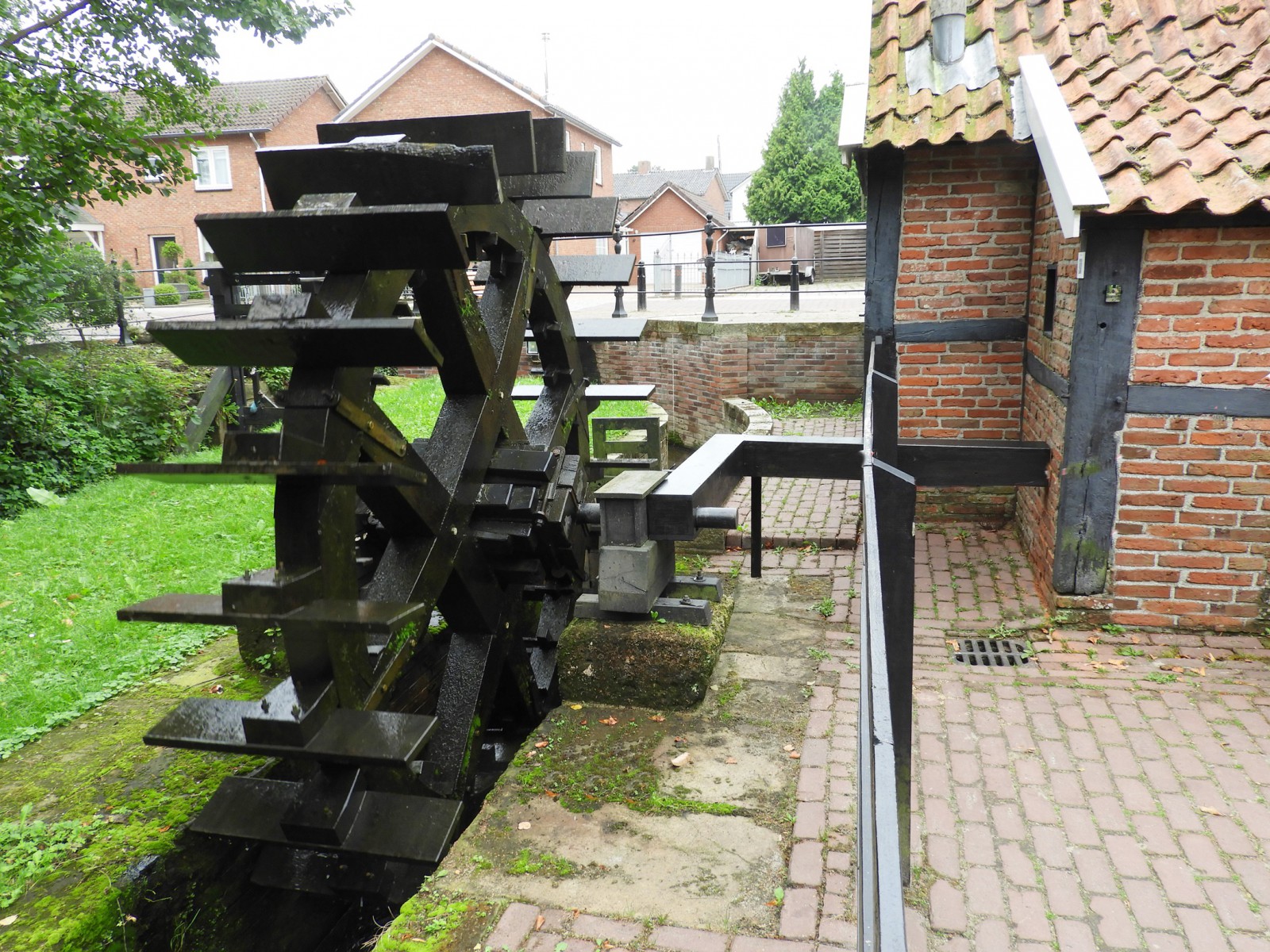
The small building is a scaled-down version of the watermill that once stood here. Today, it demonstrates how paper was made two hundred years ago. Back then, paper was made from rags using a beater driven by water power. This took place in Twente, in the Het Springendal nature reserve. The Drost Van Heiden-Hompesch, who lived here at the former Commanderie Ootmarsum, owned five paper mills in this area.
Waterwheel
The waterwheel is an undershot wheel. The wheel has blades and is set in motion by the flow of the water. This clean energy was used to power the hammer box, which pounded the rags into pulp. In a scoop box, the papermaker scooped up the pulp using a scoop frame, and this sheet of pulp was laid onto a felt mat, pressed, and dried.
We can no longer imagine a world without paper.
Paper MillAt this scaled-down replica of the watermill that once stood here, paper-making demonstrations are held regularly.
Paper Mill
The small building is a scaled-down version of the watermill that once stood here. Today, it demonstrates how paper was made two hundred years ago. Back then, paper was made from rags using a beater driven by water power. This took place in Twente, in the Het Springendal nature reserve. The Drost Van Heiden-Hompesch, who lived here at the former Commanderie Ootmarsum, owned five paper mills in this area.
The waterwheel is an undershot wheel. The wheel has blades and is set in motion by the flow of the water. This clean energy was used to power the hammer mill, which beat the rags into pulp. In a scoop box, the papermaker scooped up the pulp using a scoop frame, and this sheet of pulp was laid onto a felt mat, pressed, and dried.
We can no longer imagine a world without paper.
Paper MakingDemonstration video on paper making.
Paper Making
Marjon Droste will give a demonstration of traditional paper-making
Video: Harvest DayOn the traditional Harvest Day, the rye is harvested in various ways.
Video: Harvest Day
On the traditional Harvest Day, the rye is harvested in various ways
Main Entrance op het Openluchtmuseum Ootmarsum.
Main Entrance
"Hey, come on in so you can take a look around. Everyoneâs welcomeâcome on in, and you can look outside.
The museum is like âaâ story. A story about peopleâabout where and how they lived, what occupied their minds, what they ate, how they slept, their customs and crafts, about language and traditions, about faith, about poverty, struggle, and wealth, about war and peace.
This story is about knights, lords, neighbors, barons, citizens, and bishops. About textiles, agriculture, facade symbols, and âklöpkes.â About governance and development.
And all of this for education and entertainment. So that we may know who we are and where we come from, what drives us, and perhaps even why.
Museum
This museum tells the story of this region. The land of the Tubanti, Twente: the land of lords and farmers.
The local dialect is a variant of Low Saxon. Low Saxon is an officially recognized regional language. The language area encompasses all of northern Germany up to the Polish border and across the Danish border. In the Netherlands, Low Saxon is spoken in Groningen, Drenthe, Overijssel, southern Friesland, the Veluwe, and the Achterhoek. In the Middle Ages, Low Saxon was a very prominent language; it was the official language of the Hanseatic League. As a language, Low Saxon is highly endangered. Only 25 percent of adults and 4 percent of their children in the language area speak Low Saxon.
In recent years, there has been a renewed appreciation and interest in the language. The success of the regional soap opera *Van Jonge Leu en Oale Groond* is an example of this.
Oh, and by the way, a âgietelingâ is a blackbird, and if youâre lucky, you might spot a âkateekerâ (a squirrel).
A wonderful way to experience the history of TwenteWelcome to our Open-Air Museum
A wonderful way to experience the history of Twente
The Ootmarsum Open-Air Museum has the subtitle âLand of Lords and Farmers.â The museum offers a glimpse into how people in Twente lived two hundred years ago. It showcases not only the farmersâwho, as tenant farmers, often led a tough, impoverished, and lonely existenceâbut also the âLords,â who were appointed to manage the estates. There were many âhigh lordsâ in Ootmarsum: the Hofmeier, who was tasked with managing more than 100 farms on behalf of the bishop; the Drost of Twente, who was appointed by the stadtholder and had the authority to administer justice and collect taxes; and the Commander, who lived at the now-vanished Commandery of Ootmarsum, a monastery of the Teutonic Order.
The residence of the last Drost of Twente is open to visitors; the museum park features an exhibition on the Hofmeiers, and work is underway on an exhibition about the Commandery of Ootmarsum.
And the farmers? Well, âThe farmer plowed onâŠâ .
Most of the museum park shows how farmers used to live. Close to nature, simple, self-sufficient, and traditional. Farming, housing, livestock raising, traditions, clothing, tools, and skills such as weaving, spinning, woodworking, blacksmithing, etc.âitâs all covered. Of course, itâs nice to reread the accompanying texts from the audio tours, but itâs naturally much more exciting to come back and immerse yourself in the rural life of Twente from two hundred years ago.
The museum is like a storyThe museum is like a story. A story about people
The museum is like a story
âHey, come on in so you can take a look outside.â Everyone, welcomeâcome on in so you can look outside.
The museum is like a story. A story about people; about where and how they lived, what occupied their minds, what they ate, how they slept, their customs and crafts, about language and traditions, about faith, about poverty, struggle, and wealth, about war and peace.
This story is about knights, lords, neighbors, barons, citizens, and bishops. About textiles, agriculture, facade symbols, and âklöpkes.â About governance and development.
And all of this for education and entertainment. So that we may know who we are and where we come from, what drives us, and perhaps even why.
This museum tells the story of this regionâthe land of the Tubanti, Twente: the land of lords and farmers.
The local dialect is a variant of Low Saxon. Low Saxon is an officially recognized regional language. The language area encompasses all of northern Germany up to the Polish border and across the Danish border. In the Netherlands, Low Saxon is spoken in Groningen, Drenthe, Overijssel, southern Friesland, the Veluwe, and the Achterhoek. In the Middle Ages, Low Saxon was a very prominent language; it was the official language of the Hanseatic League. As a language, Low Saxon is highly endangered. Only 25 percent of adults and 4 percent of their children in the language area speak Low Saxon.
In recent years, there has been a renewed appreciation and interest in the language. The success of the regional soap opera *Van Jonge Leu en Oale Groond* is an example of this.
Oh, and by the way, a âgietelingâ is a blackbird, and if youâre lucky, you might spot a âkateekerâ (a squirrel).
GoodgoanâGood luck on your trip,â people here often say when youâre leaving.
Goodgoan
âHave a great trip,â people here often say when youâre leaving. We hope that this journey through the bygone days of the lords and farmers in Twente was not only an enjoyable trip, but also a time for reflection.
In todayâs Twente, you can still sense the spirit of the sturdy, hardworking people with their down-to-earth outlook on life. Here, they have âplenty of time.â Slowing down and being yourself is a great remedy for stress.
We hope to welcome you again someday to the Land of Lords and Farmers, and for now we say:
âGoodgoanâ
Weemhof op het Openluchtmuseum Ootmarsum.
Weemhof
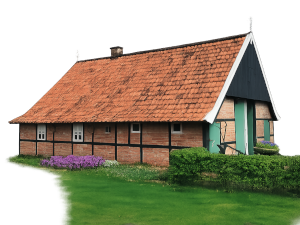
De Weemhof may appear to be the newest building on the grounds, but at its core it is one of the oldest. The trussâthe load-bearing structureâand the wooden beams date back to the 14th or 15th century. As is typical of high-quality timber framing, this framework has been reused several times. For example, from 1969 to 1997, the framework formed part of the exclusive restaurant âde Wanne.â
The name Weemhof is derived from âweemâ or âwheeme,â a term for a parsonage. The meaning traces back to the Old Frisian word âwetheme,â which refers to church property. Many villages and towns have a âWeemstraat,â and âweemâ occasionally appears in surnames such as âOude Nieuwe Weme.â
Inside the building, you can view rotating exhibitions and watch a short introductory video about the museum.
Youâll also find here the origins of the textile industry in Twente. In the last century, that textile industry provided employment to many thousands of people in the numerous factories that were located here. This industry began as early as the 18th century on farms, whereâespecially during the winter monthsâfarmers and their wives would spin yarn on a spinning wheelâoften from flax they had grown themselvesâand weave it into linen fabric on a loom.
The large mosaic comes from the Twente Textile School in Enschede, where it was installed in the school building in 1952. In 2017, the artwork by Nel Klaassen was moved to this location.
The historic loom illustrates just how much work it took to weave a piece of fabric. Do you know where the proverb âOp zân elf en dertigstâ comes from? Well, on a loom like this there is a âbeamâ on which the yarn was stretched into 30 groups of 100 threads each. By alternately moving these threadsâthe warpâup and down and passing a bobbin with a threadâthe weftâthrough them, the linen fabric was created. If you wanted to make a very strong fabric, youâd add 11 groups of 100 threads each. That was a lot of work, and as a result, the weaving took much, much longer. So anything that took a long time was said to go âat a snailâs pace.â
When there was something to celebrateâfor example, if a farmer had a new arrival, such as a young calf or a foalâhe would treat everyone to a shot of raisins in brandy. Boerenjongens. The name has nothing to do with boys. âBoerenmeisjesâ (farm girls) and apricots in brandy are a politically correct invention from a later date. In the old days, if the innkeeper trusted you, you might get credit. Then you could drink the Boerenjongens and pay later. He would then record your debts on a stick by making notches with a knife. The stick is called a âkerfstok.â The proverb âto have something on the kerfstokâ is therefore not a positive expression.
Small tools op het Openluchtmuseum Ootmarsum.
Small tools
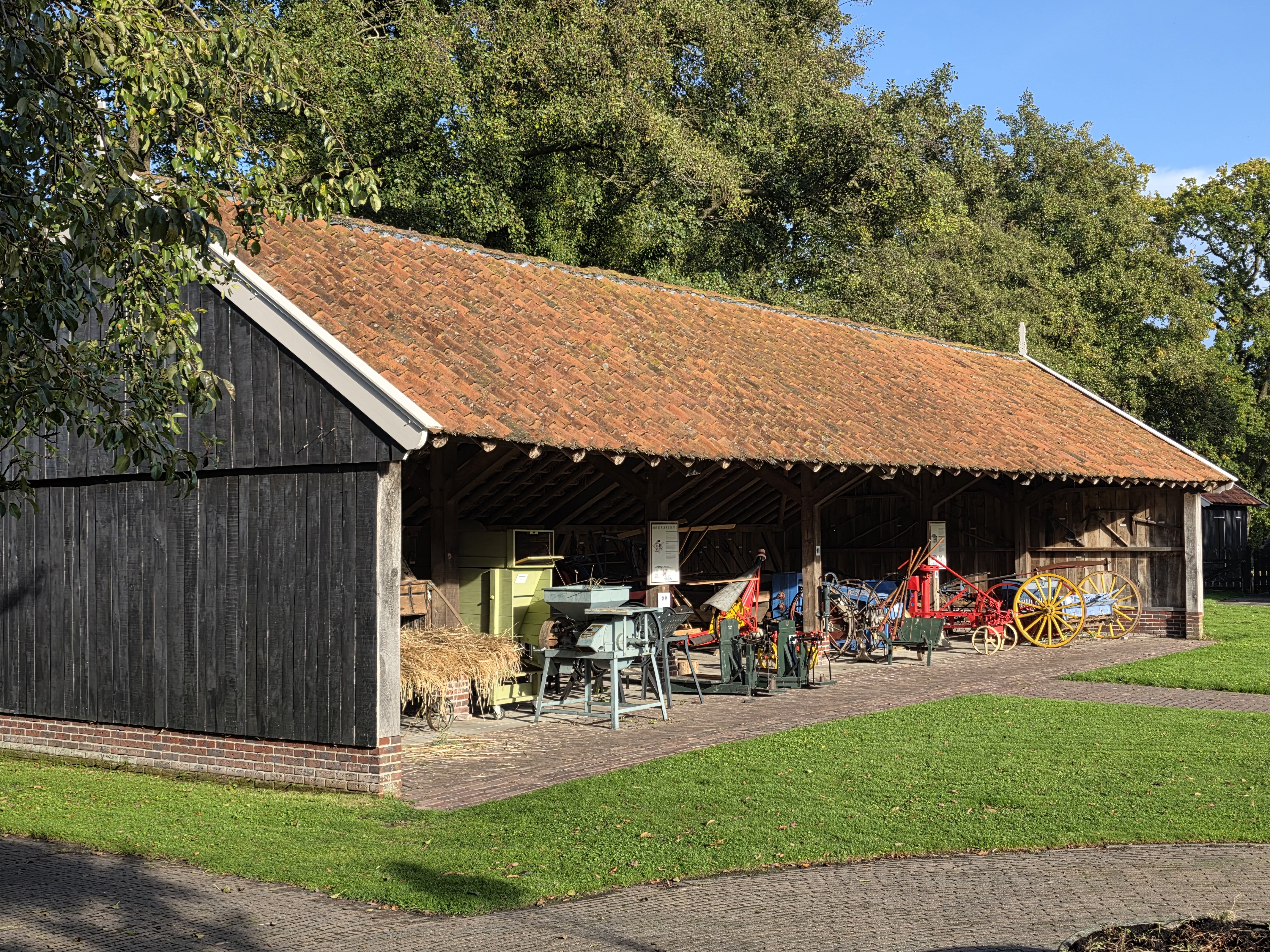
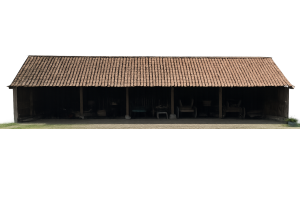
Small tools are on display in this barn
Harvest Shed op het Openluchtmuseum Ootmarsum.
Harvest Shed
It is sometimes said that âThe Twente countryside was shaped by the hands of farmers.â
The bocage landscape of fields and pastures interspersed with tree-lined hedgerows is typical of this region.
Farming has undergone significant development over the years. In earlier times, the land was worked with wooden tools and horsepower; later, with tractors and an increasing number of machines.
There were tools for plowing, fertilizing the land, sowing, and harvesting.
At the beginning of the last century, mechanical farming became increasingly common, and today we see large, heavy machinesâsuch as combinesâthat work large areas of farmland very efficiently. Things used to be quite different: laborious manual labor using simple tools.
Since prehistoric times, people have shaped the land to their will. The development of agriculture has been the driving force behind this. Unlike the primitive hunter, the farmer transforms his environment and influences the nature around him. Initially, the farmer enriches nature. The variety of landscape types created by human intervention opens up opportunities for new plant and animal species. The prehistoric peoples who lived in this region, in the vast primeval forests, initially engaged in a form of overexploitation. On the moraines and sandy soils, the higher parts of the primeval forest were burned to the ground, and wheat was grown on the resulting small fields.
No fertilizer was used; once the soil was depleted after a number of harvests, a new field was cleared in the forest. The old field was used as pasture for pigs and small cattle. The forest no longer had a chance to regrow on the depleted soil, and over time, heathland developed in these areasâwhich, much later, would cover large parts of Twente. More and more of the higher-elevation forest is cleared to make way for pastures and farmland. A direct consequence of this is accelerated water runoff through the stream valleys, which, in lower-lying areas, leads to flooding, marshlands, and the formation of swamps. Erosion creates fertile stream valleys, and after the birch forests that formed here were cleared, these areas gave way to flower-rich hayfields.
Arable farming was concentrated in the higher-lying areas. Here, contiguous agricultural areasâthe so-called âessenââemerged. At the edges of the essen, we find pastures, known as âHooilanden.â These were preferably located near water and close to the farm. These pastures were surrounded by fencing and vegetation such as pollarded willows. It is these hedgerows that make the Twente landscape so attractive.
Around 800 A.D., the first villages and towns emerged here. They were still just small settlements in a wild region. The population consisted of tribes or family groups allied with the Saxons, primarily the Tubanti, after whom this region is named. Their beliefs bore many similarities to Norse mythology. Freya, Tyr, and Wodan were the gods who were worshipped. Even today, traces of that ancient era can still be found in Twente.
The Harvest Barn â Early AgricultureIt is sometimes said that âThe Twente countryside was shaped by the hands of farmers.â The bocage landscape of fields and pastures interspersed with hedgerows is typical of this region.
The Harvest Barn â Early Agriculture
It is sometimes said that âThe Twente countryside was shaped by the hands of farmers.â
The bocage landscape of fields and meadows interspersed with tree-lined hedgerows is typical of this region.
Farming has undergone significant development over the years. In earlier times, the land was worked with wooden tools and horsepower; later, with tractors and an increasing number of machines.
There were tools for plowing, fertilizing the land, sowing, and harvesting.
At the beginning of the last century, mechanical farming became increasingly common, and today we see large, heavy machinesâsuch as combinesâthat work large areas of farmland very efficiently. Things used to be quite different: laborious manual labor using simple tools.
Since prehistoric times, people have shaped the land to their will. The development of agriculture has been the driving force behind this. Unlike the primitive hunter, the farmer transforms his environment and influences the nature around him. Initially, the farmer enriches nature. The variety of landscape types created by human intervention opens up opportunities for new plant and animal species. The prehistoric peoples who lived in this region, in the vast primeval forests, initially engaged in a form of overexploitation. On the moraines and sandy soils, the higher parts of the primeval forest were burned to the ground, and wheat was grown on the resulting small fields.
No fertilizer was used; once the soil was depleted after a number of harvests, a new field was cleared in the forest. The old field was used as pasture for pigs and small cattle. The forest no longer had a chance to regrow on the depleted soil, and over time, heathland developed in these areasâwhich, much later, would cover large parts of Twente. More and more of the higher-elevation forest is cleared to make way for pastures and farmland. A direct consequence of this is accelerated water runoff through the stream valleys, which, in lower-lying areas, leads to flooding, marshlands, and the formation of swamps. Erosion creates fertile stream valleys, and after the birch forests that developed here were cleared, these areas gave way to flower-rich hayfields.
Arable farming was concentrated in the higher-lying areas. Here, contiguous agricultural areasâthe so-called âessenââemerged. At the edges of the essen, we find pastures, known as âHooilanden.â These were preferably located near water and close to the farm. These pastures were surrounded by fencing and vegetation such as pollarded willows. It is these hedgerows that make the Twente landscape so attractive.
Around 800 A.D., the first villages and towns emerged here. They were still just small settlements in a wild region. The population consisted of tribes or family groups allied with the Saxons, primarily the Tubanti, after whom this region is named. Their beliefs bore many similarities to Norse mythology. Freya, Tyr, and Wodan were the gods who were worshipped. Even today, traces of that ancient era can still be found in Twente.
The Harvest Shed - ToolsThe land was tilled using a wooden plow and, later, an iron plow, pulled by an ox or by horses.
The Harvest Shed - Tools
There is a well-known saying: âAnd the farmer plowed on.â The land was tilled using a wooden plow and, later, an iron plow, pulled by an ox or by horses. The soil was loosened so that seeds could be sown and plants planted. The soil had to be fertilized. When the crops sprouted, weeds had to be pulled, and when the harvest was ripe, it had to be brought in.
That was hard work. A well-known saying goes, âIf the farmer just sits on his butt, no potatoes will come out of the groundâŠâ Rye, oats, wheat, and barley were grown there. During harvest, these crops were cut with a scythe, known as a âzicht.â The crops were gathered into bundles, called âsheaves.â These sheaves were placed side by side in the field to dry, forming âstacks.â Fully loaded wagons were taken to the farm, where the chaff was separated from the grain. The seeds were taken to the miller, who ground them into flour, and the baker used this flour to bake bread. The farmerâs wife usually had a small vegetable garden next to the farm for her own use.
Over the years, agriculture became increasingly mechanized. The horse disappeared, and the tractor arrived. Ingenious machines for sowing, planting, and processing the harvest were used more and more. Threshing machines, potato harvesters, choppers, etc., were designed to make the work easier. If you take a look at the Twente countryside today, youâll see the large combines from the agricultural equipment companies that, during harvest time, bring the corn, rye, or oats straight off the field and process them all at once, allowing the harvest to go directly to the factory. Things used to be quite different. Small farmers engaged in both crop farming and livestock raising and had to work all day long just to make a living. âA skinny cow and a fat horse arenât worth a thing to a farmer.â
Sheep Pen op het Openluchtmuseum Ootmarsum.
Sheep Pen
The shepherd kept his flock in the sheepfold. The flock often consisted of sheep belonging to different owners. In the summer, they could be found in the fieldsâthe communal heathlands. Around 1800, 80% of Twente consisted of heathlandsâwild, untamed lands. The sheep ensured that the heath did not become overgrown or turn into forest.
The shepherd knew the best stories about the creatures in the fieldsâabout âthe gray foals,â âthe ghost hares,â âthe hellhound,â and âthe white women.â âWiefâ has traditionally been the Twente word for âwomanâ; it was only under the influence of the negative connotations of the Dutch word âwijfââas in âviswijfâ (fishwife)âthat the word âvrouwâ (woman) supplanted âwief.â âWitteâ refers to knowing something, to purity, to knowledge. A âwit wiefâ is thus a woman who possesses a great deal of knowledge. This woman knew everything about herbs and often served as the midwife. If a cow fell ill, the âwitte wiefâ was called in, and she knew exactly what to do. Sometimes the âwiefâ was a single, elderly woman who lived on the heath or in the woods. Under the influence of witch-hunts, she was an easy target. These days, itâs best not to run into a âwit wief.â They live underground in the old burial mounds, where they hold grand drinking feasts and lure young men to them. To trap them there forever. If they dare, they ignore the warning sign and sneak into the farmhouse at night to steal beer. These white women are dangerous folk.
Sheepfold â White WomenThe shepherd kept his flock in the sheepfold. The flock often consisted of sheep belonging to different owners.
Sheepfold â White Women
The shepherd kept his flock in the sheepfold. The flock often consisted of sheep belonging to different owners. In the summer, they could be found in the fieldsâthe communal heathlands. Around 1800, 80% of Twente consisted of heathlandsâwild, rugged terrain. The sheep ensured that the heath did not become overgrown or turn into forest.
The shepherd knew the best stories about the creatures in the fieldsâabout âthe gray foals,â âthe ghost hares,â âthe hellhound,â and âthe white women.â âWiefâ has traditionally been the Twente word for âwomanâ; it was only under the influence of the negative connotations of the Dutch word âwijfââas in âviswijfâ (fishwife)âthat the word âvrouwâ (woman) supplanted âwief.â âWitteâ refers to knowing something, to purity, to knowledge. A âwit wiefâ is thus a woman who possesses a great deal of knowledge. This woman knew everything about herbs and often served as a midwife. If a cow fell ill, the âwitte wiefâ was called in, and she knew exactly what to do. Sometimes the âwiefâ was a single, elderly woman who lived on the heath or in the woods. Under the influence of witch-hunts, she was an easy target. These days, itâs best not to run into a âwit wief.â They live underground in the old burial mounds, where they hold grand drinking parties and lure young men to them. To trap them there forever. If they dare, they ignore the warning sign and sneak into the farmhouse at night to steal beer. These white women are dangerous folk.
Sheep Pen â FlaxA farmhand was entitled to a small plot of land on which she could sow flaxseed. This privilege was stipulated when the employment contract was signed and constituted part of her wages.
Sheep Pen â Flax
A farm maid was entitled to a small plot of land on which she could sow flaxseed. This privilege was stipulated when the employment contract was signed and formed part of her wages.
The maid was often entitled to a âspintââa plot measuring 12 by 12 stepsâof flax that was kept near the manure. Flax requires good fertilization. This flaxseed, or linseed, was sown on the âlienstuk,â the flax field. There are two types of flax: white-flowering and blue-flowering. The white variety, which is shorter and has more branching on the stem, is sown for seed yield. The blue-flowering variety is sown for its fiber, which can be used to make textiles. The maid could process the harvest into linen for her trousseau.
In Twente, there were many farmsteads where a ârot farmerâ lived. These were not unpleasant fellows, but farmers on whose land the ârotâ or âreutâ pits were located, where the flax was rotted. To protect fish stocks, rotting flax in rivers and streams was prohibited throughout
Northwestern Europe. Rotting was a necessary step in processing flax and ensured that the fibers could be harvested.
Sheep Pen - LoomWeaving was the farmer's winter work. The woman spun the yarn. The farmer did this on a loom.
Sheep Pen - Loom
Weaving was the farmerâs winter work. The woman spun the yarn. The farmer did this on a loom. He threw or shot the weftâthe crosswise threadsâacross the warp, the lengthwise threads. This process is repeated endlessly; thatâs warp and weft. Youâre surely familiar with that proverb.
The warp threads were reinforced with starch because they wear out the fastest. Often, a special kind of bucket was used for this. Weaving was winter work, and if the starch paste froze, the weaver couldnât continue and feared he wouldnât be able to finish his work. âEt vrös em op ân emmerâââitâs freezing on the bucketââis an expression in Twente used to describe someone who becomes anxious.
The warp threadsâseven to eight hundred of themâwere wound around a so-called âBoom.â That was quite a task. Setting up a Boom was done with a ânoaberâ (neighbor), and it was a precise, patient, and time-consuming job that naturally involved a lot of conversation. When a new âboomâ was set up on the loom, a new project was launched.
Before the flax can be spun, the fiber must be separated from the wood; for this, one uses, among other things, the hekel. This is a plank with pins or nails arranged in increasing density, used to comb the wood fibers out of the flax fibers. Often, people would sit on both sides and take turns draping a piece of flax over the comb. âTo put someone through the hekelâ thus meant trying to find out the fine details of something.
Tuffel Cellar op het Openluchtmuseum Ootmarsum.
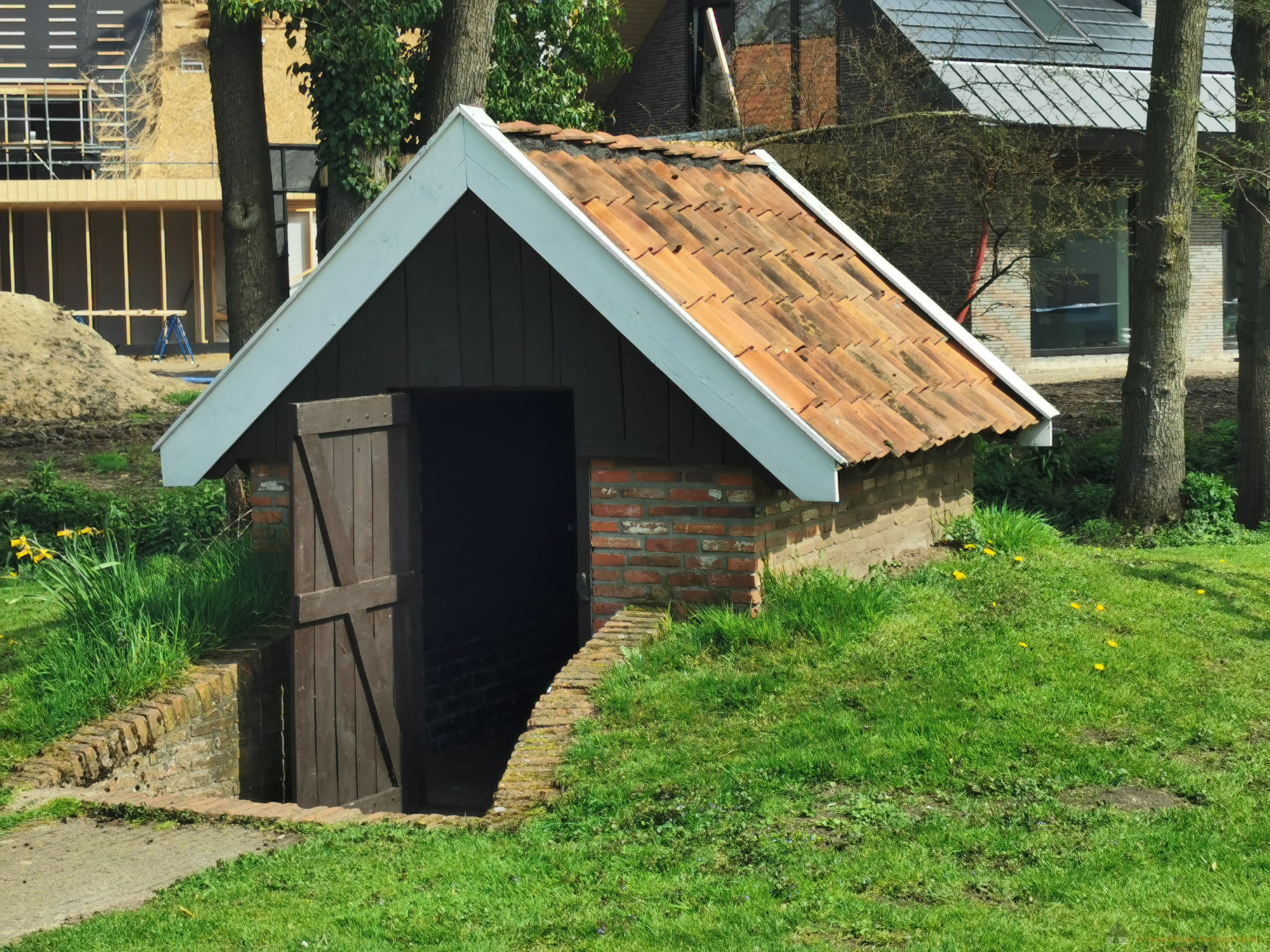
Tuffel Cellar
Around 1750, the potato made its debut as a crop in Twente. At first, the farmers wanted nothing to do with the potato; because the berries and the stem were poisonous, they also believed the tuber was unhealthy. However, potatoesâor âtuffelsââcould be grown on fallow land, and this crop could feed two to three times as many people. That was a matter of dire necessity at the end of the 18th century.
Potatoes must be stored frost-free, and for that reason, a âtuffelkellerâ or âtuffel-helâ was builtâa warm hole in the ground surrounded on both sides by earth and insulated with straw and reed mats. In addition to potatoes, other crops and fruits were often stored in the cellar as well.
Smithy op het Openluchtmuseum Ootmarsum.
Smithy
Every village had its own wheelwright and blacksmith. Both worked on commission and had to be able to work well together. The wheelwright made the wheels, and the blacksmith made the iron rims that were fitted around them. The wheels were secured to the axle with a pin. The pin, which is subjected to great pressure while driving, prevents the wheel from popping off the axle. âTo stand firm,â meaning to be unyielding, is the well-known proverb. Iron has the annoying tendency to shrink as it cools. The blacksmith must therefore be a skilled craftsman to ensure the hoops fit precisely. If they were too small, youâd be in for a world of troubleâŠ.
You have to strike while the iron is hot. You need to have plenty of iron in the fire to keep working. The barn is a drive-through type. You can drive into the barn on one side and drive out on the other without having to turn the wagon around.
Making straw bundles
Bundles of straw were placed directly under the shingles and on the shingle battens. These are called âdokken.â Theyâre the leftover straw from the rye harvest. The full length is folded over once and tied with a few strands. Itâs precision work. If you donât do it right, rainwater will seep in during a heavy downpour. And then youâll have to make more docksâŠ.
Many machines were connected to what was called a âgöbel.â A horse walked around this horse-powered mill, providing the drive. It was hard and tedious work for a horse; it had to exert constant force at a steady pace. The horse therefore often wore blinders. If the horse walked too slowly, it could get a âlong oatââthat is, lashes from the whip.
Some farmers treated their horses roughly. âIâd rather be his Bible than his horse. Iâd rather be his Bible than his horse, because he canât hit that.â
Traditional BlacksmithingA short video about blacksmithing during one of the craft days.
Traditional Blacksmithing
During the Craft Days, iron is forged here while it's hot.
Los Hoes op het Openluchtmuseum Ootmarsum.
Los Hoes
The "Los Hoes" is a type of farmhouse where people and animals live together in the same space. âHoesâ means âhouse,â and âlosâ in the Twente dialect means, among other things, âopen.â So here, you âopenâ the door or window. It has also been suggested that the âlosâ in âlos hoesâ means ânot fixed.â In other words, the farmhouse was movable. After all, the trusses, the timber framing, and the load-bearing structure are founded on field boulders and are easy to dismantle. It was also said to be classified as personal property for tax purposes. This is a myth. Archaeological research shows that since the mid-13th century, the Twente farmsteads have been located more or less in the same place.
This Los Hoes dates back to 1664. On April 6 of that year, Lambert te Gronvelt and Tryne, his wife, held a so-called ârichtersmoalâ to thank all the neighbors who had helped erect the trusses. This is recounted in the inscription on the barn door arch. Standing with your back to the large front door, you can see the cowshed on the left. The pigsty was on the right. Next to the pigsty was the weaving room, and behind that, the milking room. On the left were the box beds. People were smaller back then but often slept sitting up. There was a superstition that if you lay on your back, all the blood would rush to your head and you would die. Moreover, sleeping sitting up provided relief for the lungs.
The best part of a âLos Hoesâ was the attic. This is where the harvest was stored. The attic was covered with âsleeten,â long, thin tree trunks. The smoke from the Losse fire drifted through these sleeten and killed any insects still present in the harvest. At bedtime, the fire pit was placed on top of the still-smoldering fire. This was to prevent the cat from getting too close. After all, a catâalso known as a âbalknhaasââcould get anywhere in the farmhouse, and if a burning âbalknhaasâ fled to the hayloft, things could get pretty hot in thereâŠ
Los Hoes - InteriorIn the evenings, people would gather around the open fire and tell each other exciting stories and legendsâtales that featured the supernatural.
Los Hoes - Box Spring, GoastokThe farmer and his wife slept in the box bed closest to the livestock. The other box bed was for the children.
Los Hoes - Box Spring, Goastok
The farmer and his wife slept in the box bed closest to the livestock. The other box bed was for the children. Up to four small children could sleep in a single box bedâtwo with their heads on one side and two with their heads on the other. The farmhand and the maid slept on the low loft floor, called the âhiel.â If there were many children, a small bed or large drawer would sometimes be set up under the parentsâ box bed; this is where the âunderrated childâ would sleep.
Right next to or inside his box bed, the farmer kept his walking stick. A magnificent walking stick with which he could walk, goan, and ward off danger, sloan. The walking stick is made by nature. Wrap a honeysuckle around a branch and let both grow together. Cut the branch when itâs big enough, remove the honeysuckle, and attach a round knob to it.
A lovely story about a walking stick is that of Gait. Gait wasnât afraid of the devil, and heâd say so at every opportunity. You couldnât run into Gait without him saying, âIâm not afraid of the devil.â Gaitâs sister had been invited to a spinning party in Vasse, and Gait had to carry the spinning wheel. Marietje was there too, and it was a lot of fun. But during the spinning party, the weather got worse and worse. A massive thunderstorm was approaching. The weather actually got so bad that the farmerâs wife said, âKids, youâre welcome to stay the night.â Thatâs how bad the weather really was.
But Gait⊠âGait wasnât afraid of the devil,â his friends said, âso he might as well go home.â Gait couldnât back down; he didnât want to lose face. He grabbed his walking stick and set off through the rain and storm. In the barn, his friends find a cowhide and a cow skull, and they decide to teach Gait a lesson. His best friend drapes the hide over himself and puts on the skull. He hides in the ditch along the country road. Gait comes walking by with his cane; a flash of lightning illuminates the field, and his friend jumps up: âBoo, Gait! Iâm the devil!â
Gait is scared out of his wits, but doesnât hesitate for a moment. He grabs his cane and strikes the devil right between the eyes. The next moment, itâs dark again and the devil has vanished. Gait feels like a real man and walks home through the rain, whistling. The next day, he runs into his friends in town and proudly tells them about his heroic deed. His friends then go searching and find Gaitâs best friend in the ditch with a gigantic bump on his head. According to the story, Gait was never invited on a fishing trip again.
So there you have it: you donât need to be afraid of the devilâyou just shouldnât brag about it.
Eppink Barn op het Openluchtmuseum Ootmarsum.
Eppink Barn
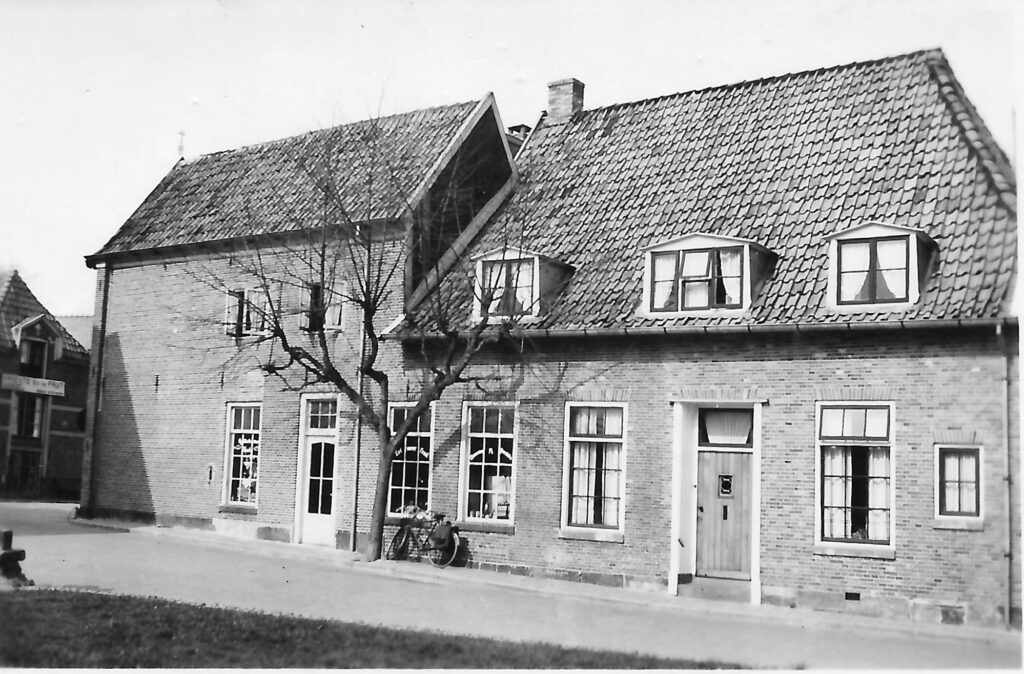
This âLos Hoesâ-style city farm was located on the embankment in Ootmarsum and was inhabited by the Eppink family. In Low Saxon, the suffix âinkâ or âingâ in personal names means âson of.â Thus, âEppinkâ means âson of Eppe,â and âGeerdinkâ means âson of Geerd.â Many surnames in this region have such a suffix.
The farmhouse was dismantled by volunteers in the 1970s and moved to the open-air museum. Nearly all the buildings on the museum grounds are relocated structures. During the relocation and reconstruction, the remaining historical building materials were used wherever possible. Because the buildings have been moved, they are no longer designated as historic monuments.
At the Eppink city farm, the original layout is barely recognizable. The exterior, however, still reveals its original function. In particular, the large entrance doors that provided access to the âdeel,â the farmâs work area. These doors can be opened completely, after which the central post, the âstiepel,â can be removed. The wide entrance created in this way allows the farmer to drive the farm wagon into the house and unload the harvest into the attic. The barn was located at the rear, the back end of the farmhouse.
Court SystemAn explanation of the court system in the early Middle Ages.
Court System
The manorial system is a system for managing estatesâknown as âmanorsââthat dates back to the early Middle Ages. The lord divided his estates into smaller parcels organized around a central manor or farmstead. These small units were allocated to serfs.
During the turbulent early Middle Ages, many small farmers sought protection from a lord. The relationship between lord and farmer was defined according to the lordâs power; as a result, these relationships could vary by place and time. These farmers became serfs.
A serf was a farmer with certain obligations to a lord. They did not own the land but did have rights of use, could accumulate property, and had a say in the inheritance of the farmstead they managed. With these rights came obligations. These could include surrendering a portion of the harvest or providing manual labor for the lordâknown as manorial services. The relationship was reciprocal; the lord also had duties toward the serfs. For example, the lord was responsible for their safety. The serf was bound to the land and could therefore not move without his lordâs permission. If the land passed to another lord, so did the serf. The rights and obligations between serf and lord were subject to constant negotiation between both parties.
Acts of war, crop failures, failure to fulfill obligations, or a lack of income on the part of the lord were all circumstances that could lead to adjustments in rights and obligations.
The lists of goods that serfs were required to pay provide a good picture of the products cultivated in this region during the Middle Ages. The lists included, among other things: rye, barley, oats, beans, berries, honey, malt, pike, sheep, pigs, chickens, and cattle. As the Middle Ages progressed, more and more rent was paid in cash.
Hofmeier/Van BeverfordeAt the head of the court stood a figure known as the Hofmeier. Since the early Middle Ages, the bishop of Utrecht had been the most powerful nobleman in Overijssel.
Hofmeier/Van Beverforde
At the head of the manor stood a man known as the steward. Originally a serf, he was able to lead others due to his personality and authority. The steward was responsible for the day-to-day operations of the manor. Acting as the lordâs representative, the steward adjudicated disputes among the serfs, managed the estate, and collected the taxes and rents owed by the serfs for the use of the lordâs property.
Since the early Middle Ages, the most powerful lord in Overijssel had been the Bishop of Utrecht. The area over which the bishop ruled as a prince was also known as âhet sticht.â The bishopâs extensive estate on the IJssel River is known as âhet overstichtâ and encompassed the entirety of Overijssel, Drenthe, and the city of Groningen. To manage this effectively, the bishop established various manorial systems in Twente.
Ootmarsum served as the main court in Twente. If a serfâfor example, one belonging to the Oldenzaal courtâdisagreed with a decision made by their own court steward, they could appeal to Ootmarsum. In the late Middle Ages, the Ootmarsum manorial estate comprised approximately 140 farmsteads. These farmsteads formed a patchwork of holdings; some of them were located in what is now the County of Bentheim, across the border in Germany.
The Bishop of Utrecht was not the only lord in Twente with serfs who were administered through a manorial system. Another major manorial system was that of the Teutonic Order, which owned the Commanderyâthe castle complex in Ootmarsum that once stood on this site.
In 1527, ownership of the episcopal manors passed to Emperor Charles V and subsequently to his son Philip II. After Philip II was deposed during the Eighty Yearsâ War, the episcopal manors came into the hands of the States of Overijssel. In practice, little changed, except that the van Beverforde family passed down the office of court steward from father to son. The first van Beverforde to hold this office was Reint van Beverforde in 1612; he was married to a niece of his predecessor. The family acquired extensive landholdings and rose to prominence.
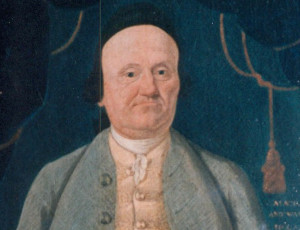
Around 1720, Jan Hendrik van Beverforde was able to afford to have portraits painted of himself, his wife, and his son Hermannus.
Staten BibleA Story About the States Bible
Staten Bible
For Twente and Overijssel, the Eighty Yearsâ War was a time of plunder and decline. Dutch and Spanish troops ran rampant in the countryside. Farmsteads were abandoned and farmland lay fallow. Calvinism had few followers among the population; indeed, the Iconoclastic Fury passed Overijssel by entirely. Oldenzaal remained under Spanish control for a long time.
Protestantism, which was forcibly introduced, found little support, and large parts of Twente remained Catholic.
Although freedom of conscience officially prevailed in the Republic of the Seven Provinces after the Eighty Yearsâ War, every Dutch citizen was expected to convert to the Reformed Church. Life was not made easy for Catholics. Their church buildings were confiscated. Secret gatherings were organized in clandestine churches and barn churches. Membership in the Reformed Church was mandatory to hold public office.
A point of contention during the Reformation was the question of for whom the Bible was intended. The Catholic clergy believed that the Bible should preferably not be read by ordinary people; instead, they could listen in church to the clergyâs explanations as they read the Bible in Latin. The clergy acted as mediators between God and the faithful.
The Protestants, on the other hand, believed that every believer should read the Bible for themselves and that a pastor was, first and foremost, a servant of the Word of God. This also meant that the Bible had to be available in oneâs own language, preferably in a translation that was as reliable as possible. In 1618, the Synod of Dordrecht commissioned a translation from the Greek and Hebrew. This âStates Bibleââso named because it was funded by the States Generalâserved as the standard Bible for 300 years and had a major influence on Dutch culture and language. The translation was completed in 1637, and between 1637 and 1657, several hundred thousand copies were printed. Expressions such as âby the sweat of his brow,â âcarried on peopleâs hands,â and âa feast for the eyesâ originate from the States Bible.
Harmannus van BeverfordeHermannus van Beverforde was born in 1725, the son of Jan Hendrik van Beverforde and Maria Keller van Neuenhaus.
Harmannus van Beverforde
Hermannus was born in 1725, the son of Jan Hendrik van Beverforde and Maria Keller van Neuenhaus. His father, Jan, came into possession of Hof Ootmarsum shortly before Hermannusâs birth, following a long-drawn-out inheritance dispute. This estate comprised real property that had been accumulated over the centuries through gifts and purchases within a system of serfdom. Jan had to dig deep into his pockets to acquire it and took out two mortgages. In fact, the estate had been in the hands of the van Beverforde family by inheritance since 1612. They bore the title of Hofmeier, steward of serf estates, but in reality they were large landowners.
In 1748, Hermannus married Antonetta ten Cate. Antonettaâs sister Anna married Johan Georg Dröghoorn at almost the same time. . Hermannus and Antonettaâs marriage was short-lived, as Antonetta died in childbirth just three days after the birth of their son Anthony in 1756.
In 1767, Hermannus married for the second time, this time to Mettina Alegonda Cramer-Knijpinga. She was originally from Groningen and was the widow of Hermannus Cramer of Ootmarsum. Both brought a son from their previous marriages: Hermannus, Anthony van Beverforde, and Mettina, Hendrik Knijpinga Cramer. They moved into the Hofmeiershuis on the main street in Ootmarsum. The two stepbrothers never got along. There were many arguments and conflicts over financial matters. This was a source of great sorrow for Mettina, who, in desperation, even attempted suicide in the town canal running behind the house.
Three prominent Ootmarsum families were thus linked to one another: the van Beverforde and Dröghoorn families through Hermannusâs first wife, and the van Beverforde and Cramer families through his second wife. All three were part of Ootmarsumâs predominantly Reformed administrative and civic elite. Hermannus died in 1792 and, as a man of importance, was buried in the Great Church (Protestant at the time).
Burial in the church was reserved exclusively for important people. Often, the grave would remain open for a while, causing an unpleasant corpse odor in the church. Hence the expression ârich stinkers.â
AtlasAn atlas is a status symbol. It shows that the owner has knowledge of the world.
Atlas
An atlas is a status symbol. It indicates that the owner has knowledge of the world.
This atlas contains a series of copper engravings of maps and birdâs-eye views. The maps were created by various cartographers and publishing houses. The oldest engravings date from 1605 and were printed/produced by Nicholaas Visscher. The most recent engravings are from the Seutter publishing house and date from the late 18th century. In addition to Seutter and Visscher, the atlas also contains engravings by de Witt, Ottens, Hommano, and others. In total, the atlas contains 124 partially colored maps. An atlas of this kind was a major status symbol and a valuable possession. Its owner possessed knowledge of the world. The maps illustrated how the world had expanded through voyages of discovery and trade contacts. The maps themselves were exceptionally beautifully executed, though often outdated. Accuracy was of secondary importance. The atlas indicated that the owner was âa man of the world,â erudite and well-read.
Johan Georg DröghoornJohan Georg Dröghoorn, the father of Wennemar Hendrik, was a wealthy man until the mid-1770s.
Johan Georg Dröghoorn
Johan Georg Dröghoorn, the father of Wennemar Hendrik, was a wealthy man until the mid-1770s. He succeeded his father as steward of the Huys Ootmarsum and also served as steward of the stadtholderâs estate in the County of Bentheim. In addition, he derived income from his own farms, houses, and parcels of land. Furthermore, the bailiff of Twente, Baron van Heiden Hompesch, owed him a total of 13,000 guilders.
In 1775, he was dismissed by the bailiff without any explanation. When he subsequently tried to recover his money, the drost would only agree to pay with debts that the farmers owed to the drost. Van Heiden ensured that Johan Georg also lost his job as steward of the stadtholderâs estates. Johan Georg had no choice but to accept the debt swap and was then faced with the thankless task of collecting his 13,000 guilders from âthe poor folk.â Whatever the bailiff and his new steward thought they could not collect, Johan Georg was tasked with collecting.
The story goes that Johan Georg still seeks revenge for the injustice done to him. They say he still haunts the Ageler Broek as the little red man in the marsh. To collect his debts from the farmers, Johan sets out, wearing a red jacket. Johan is a clever fellow and manages time and again to surprise the farmers and recover a good portion of his capital.
In 1795, Johan died and, according to the story, was buried in the Ageler Broek on the left side of a birch tree. A year later, his family and loyal followers visited the grave. To their surprise, it was now located on the right side of the birch tree. Every year, the grave moves toward Ootmarsum. At first quickly, but gradually more slowly, and eventually at a roosterâs paceâone roosterâs step per year. A few years after his death, several children from Ootmarsum disappear in the Ageler Broek. They likely drowned in the marsh, but rumors soon spread throughout the town that the Little Red Man was behind it. Subsequently, his shadow is seen more and more often around farmyards in Tilligte and Agelo. The little red man is said to lure unsuspecting walkers into the marsh with a red light to steal their money. In a few years, his grave will arrive at the museumâthe very place where his hated boss once lived. Who knows what will happen then?
Klopkeshuis op het Openluchtmuseum Ootmarsum.
Klopkeshuis
A unique group of women in Twente are the âkloppenâ or âklöpkes.â During the era of the Catholic underground churches, they would go from house to house, knocking on windows and doors, to tell the faithful where Mass was being celebrated in secret. During the era of religious persecution, they were the vanguard of the Counter-Reformation.
This âKlöpkeshoesâ is a replica of the Mariakloese from Noord-Deurningen; the stone next to the door inscribed âSoli deo Gloriaâ from the year 1684 was once located above a âklöpkeshoesâ on the Jonkman property in Deurningen. Although the klöpke enjoyed a certain status, her dwelling was often no more than a small hut, sometimes built against the farmhouse or the barn. For the farmer, it was an honor to house a klöpke. It could never be a bad thing with an eye toward the afterlife.
After the religious persecution, the âklöpkeâ continued to exist as a special institution. The âkloppenâ took a vow of chastity and remained unmarried. Klöpkes wore uniforms, but unlike nuns, they lived on their ownâeither in a room with a box bed at the home of a married brother or sister, or in a âklöpkeshoes.â
The klöpke had great influence in the community and served as a sort of social worker. That this was not always appreciated is evident from a number of Twente sayings about these pious ladies.
âA klop is a saint in church, a gossip on the street, and a devil at home.â They took an active interest in the upbringing of the children and served as the priestâs eyes and ears. They brought him all the newsâboth the good and the bad. Where thereâs a busybody in the house, the devil sits on the chimney.
Courtroom op het Openluchtmuseum Ootmarsum.
Courtroom
Even if the citizens of the state fancied themselves quite something with their little estates and patriotic drivel about liberty, equality, and fraternity, they had no real power. No, take Baron Sigismund Vincent Gustaaf Lodewijk van Heiden Hompesch tot Ootmarsum, Imperial Count, Drost of Twente and Salland, guardian of the stadtholder, the Prince of Orange. Known by his opponents as the Colossus. Colossal in stature and colossal in his deeds. The magnificent Huys in Ootmarsum was just one of his many possessions. Around the mansion, Sigismund had built a veritable pleasure garden with a game reserve, fishing ponds, and a magnificent domed garden featuring an Arion fountain. This was true power, and Sigismund behaved accordingly. He was by no means popular among the people of Twente. His nephew was the drost of Vollenhove, and together they governed Overijssel. âMuch to the displeasure of its citizens,â according to a contemporary and mayor of Zwolle. The bailiff openly abused his power. People were so afraid of this man that many stories circulated after his death.
Sigismund died of a stroke while fishing in his ponds on a beautiful summer day. That evening, his body was carried to the church in a lead coffin. The next morning, so the story goes, all the trees along this route had lost their leaves. In the middle of summer.
It is said that Sigismund cast a curse on the castle. For instance, in a fit of religious zeal around 1780, he is said to have had a Catholic priest murdered. Catholicism was tolerated in clandestine churches, but this Roman Catholic scoundrel had the audacity to preach in public. An example had to be made. Before his death, this priest is said to have cursed the house and its inhabitants. âNot a single stone of this proud house will remain standing.â Forty years later, in 1820, the Ootmarsum House was demolished stone by stone.
Hofkamer - City of OotmarsumThe earliest description of Ootmarsum likely comes from an account of the life of Bishop Raboud.
Hofkamer - City of Ootmarsum
The earliest description of Ootmarsum likely comes from an account of the life of Bishop Raboud. This hagiography, written by a canon from Utrecht in the second half of the 10th century, recounts the death of Saint Radboud during a journey through the eastern parts of his diocese. Radboud fell ill and had himself transported to Ootmarsum, a place he enjoyed visiting. Radboud died in Ootmarsum in 917. The text notes that Ootmarsum is situated in a particularly beautiful location.
Situated at the intersection of a major north-south route and the trade route from northern Germany to Flanders, Ootmarsum developed into a fortified town. In 1325, Ootmarsumâs town charter was confirmed.
Many town farms feature a facade emblem, often consisting of crossed and stylized horse heads. Saxon examples of this highly stylized form, as seen on the Los Hoes, are known to date back to the first century B.C. For the Saxons, the horseâand particularly a gray horseâwas a sacred animal. These horses were therefore believed to keep misfortune out of the farmstead. Another widespread archetype of the gable emblem is the âthunder broom,â a representation of the lightning bolts that Thor or Donar hurls at the earth. The symbol protects against witchcraft and, of course, thunderstorms. To ward off thunderstorms, house leeks were also often planted on thatched roofs.
Since the mid-18th century, Catholic and Protestant gable symbols have come into vogue. Catholic symbols often feature ecclesiastical motifs such as the cross, the chalice, and the host. Protestant symbols are more purely decorative. The lily, as a symbol of the Reformed Church, is a common motif, and the vase motif is also quite widespread.
Court Chamber - Saxon WarsOotmarsum is one of the oldest towns in Twente. Around 800 AD, one of the first wooden churches in Twente stood here.
Court Chamber - Saxon Wars
Ootmarsum is one of the oldest towns in Twente. Around 800 AD, one of the first wooden churches in Twente stood here. From the ecclesiastical base in Utrecht, Anglo-Saxon priests ventured into pagan Saxony to spread the faithâwith mixed success. Charlemagne changed all that.
Starting in the year 772, this Catholic Frankish king launched military campaigns to incorporate the Saxon territory into his empire. His first act of war was to order the felling of the âIrmensul,â an important Saxon shrine of great symbolic significance. The Irmensul was a large, upright tree trunk that, according to the Saxons, supported the entire world. The Saxons responded with open rebellion and by burning down the first wooden churches. They also elected a duke, a military commander who was required to step down in peacetime. The first duke known by name was Widukind or Wittekind; his strategy of constant rebellion against Charlemagne ensured that he remained the central authority in the Saxon region for decades. After Charlemagne defeated the Saxons in 777, he summoned all Saxon nobles to the imperial diet and incorporated them into the Frankish Empire while preserving their rights. Wittekind, however, refused to yield and continued fighting for another seven years. In 785, he realized it was a lost cause and was baptized. Charlemagne acted as his godfather, and the pope hosted a grand banquet in honor of the baptism. Wittekind became Charlemagneâs most important vassal in the Saxon region and was permitted to retain the title of Duke. With Wittekindâs baptism, the Christianization of the Saxons could continue with renewed vigor. Utrecht and MĂŒnster were granted bishoprics, and strict laws were enacted to enforce the transition to Christianity. The dead may only be buried near a church. Burning or burying the dead according to pagan customs is punishable by death. The same penalty applied to failing to baptize children.
Ootmarsum served as a key stronghold in the Christianization of the Saxons and grew to become one of the largest parishes in Twente.
Many legends surround Wittekind; for example, it is said that before his baptism, he always rode a black warhorse. After his baptism, he was seen only on a white horse. This white steed is featured, among other things, in the coat of arms of Twente.
Carriage House op het Openluchtmuseum Ootmarsum.
Carriage House
Two hundred years ago, a horse-drawn carriage was the only means of transportation in rural areas. At that time, there were no paved roads, and traveling on sandy paths often took many days. People could change horses at the inns in the various villages. The golden carriage is still a spectacular sight once a year. In the countryside, farmers often had several horses. These included heavy horses for hard laborâthe so-called âBelsenââand somewhat more luxurious horses for the carriage.
Hitching the horse was quite a chore, but driving the horse so that you could set off in the carriage was no easy task either. If you did it completely wrong, youâd hear: âYouâre not supposed to hitch the horse behind the wagon!â
The delivery wagon was the covered wagon, also known as the sail wagon. It was used to transport supplies to and from the market. On special occasions, such as a wedding, the covered wagon was beautifully decorated with paper roses.
The âSjeesâ is a small two-wheeled carriage designed to carry two people.
The landauer is a stylish open carriage used by the wealthy.
The church carriage is a small carriage with a sort of cabin that allowed people to attend church in their Sunday best without getting wet, even in bad weather.
In the past, there was no public transportation, and the stagecoach could accommodate only a few people; this is how public transportation gradually began to take shape.
In the cities at that time, the omnibusâa long carriage with room for several people, pulled by horsesâwas in use. To this day, these carriages still operate in the area; they are called a âJan Plezier.â Itâs a carriage for 10 to 15 people, perfect for a nice, leisurely ride through towns, villages, forests, and heathland.
Carriage House op het Openluchtmuseum Ootmarsum.
Carriage House
The carts used on and around the farm ranged from small to large. From simple wheelbarrows to handcarts, dump carts, and heavy hay carts and harvest carts.
The carts have wooden wheels, often with a metal rim around them, sometimes with 2 wheels, sometimes with 4, and often with a swiveling chassis. The drawbar is the long beam to which the horses are hitched. The manure cart was used to haul manure from the barn out onto the fields. There is a harvest wagon that was used to transport potatoes, beets, and other tubers. The hay wagon is equipped with support poles so that the hay can be loaded high. If you loaded too much hay onto the pitchfork during haymaking, most of it would often fall off. âYou should never take on too much hay.â The hay wagons and the entire family working in the fields during the summer were a beautiful sight that can be found in countless paintings.
The Easter Wagons
Three large, heavy carts stand here for a whole year, waiting to be brought out of storage at Easter to serve in the Easter traditions. The organizers of these traditions in Ootmarsum, âDe Poaskeerls,â use these wagons to collect the wood for the Easter bonfire from the nearby nature reserve. On Easter Saturday, this firewood is collected amid great public interest. The three carts, each pulled by two strong âBelsen,â are loaded so heavily that as they pass through the center of Ootmarsum, they brush against the houses on both sides of the street. Accompanied by the singing of Easter songs, the Easter wood is taken to the Easter meadow, where the fire is lit at 8:00 p.m. on Easter Sunday as a symbol of the new life that summer will bring.
Heinenboer op het Openluchtmuseum Ootmarsum.
Heinenboer
As soon as the fieldsâthe heathlandâin Twente became ready for large-scale cultivation, people switched to a different type of farm. The âLos Hoesâ type, which had been dominant in this region until then, was replaced by a more luxurious farm design in which people and animals lived separately.
This farmhouse belongs to a small-scale farmer and dates back to 1850. Although smaller, it is still much more comfortable than a âLos Hoes.â People and animals live separately. The farmerâs wife has a stove and a wash kitchen with a water pump. People sleep in a bed rather than in a box bed. There is alsoâa great luxuryâa toilet in the building, a real convenience. Thanks to this convenience, people didnât have to brave the rain and wind to get to the cottage. A similar convenience was available in the death row cell, where one could do what one had to do at oneâs leisure.
The farmer likely had sources of income in addition to his farm. He probably earned money in the winter by making âdokken.â âDokkenâ are the straw plugs placed under the roof tiles to make the roof more rainproof.
The farmerâs wife earned extra income by making lace. Lace is valuable and very labor-intensive. The wealthier the farmer, the wider the lace on the farmerâs wifeâs bonnet. Those who are well-off show it off.
With 12 children in such a small house, it was a tight squeeze. The older children therefore slept right under the roof tiles, on the eavesâthe low attic above the cattle stalls. If they were lucky, they slept above the cows, which meant they had âfloor heatingâ in the winter.
People usually slept fully clothed, and if it snowed outside at night, they had to brush the snow off the blankets in the morning.
Heinenboer Farmhouse - NoabersBeing asked to be a noaber is an honor, but itâs also not something to be taken lightly.
Heinenboer Farmhouse - The BarnWork was underway on the threshing floor. The rye was spread out on the floor, and the young men used flails and threshing clubs to beat the grains out of the ears.
Heinenboer Farmhouse - The Barn
Work was underway on the threshing floor. The rye was spread out on the floor, and the young men used flails and threshing clubs to beat the grains out of the ears. The flails struck at a steady pace, âevery other beat.â The young menâeven after workâstill had enough energy left to court the ladies, which is why this period is also referred to as the âflail years.â It was a carefree time of camaraderie and adventure. After removing the strawâwhich was used, among other things, to make matsâchaff, grain, and dust remained on the threshing floor. These were tossed with a winnowing basket, allowing the wind to blow away the lighter parts: the chaff and the dust. The wheat was then kept in the winnowing basket. âSeparating the wheat from the chaffâ is still a proverb that recalls this practice.
To stimulate the marriage market, a âspinvisietâ (spinning party) was occasionally organized in the barn. The young farmerâs daughter would then invite her friends to spin yarn together in the barn. These friends would have an unmarried brother carry the spinning wheel. This brought everyone of marriageable age together, and they would get up to some mischief. The farmerâs wife would look the other way when two of them disappeared into the hay.
Slaughter Corner
You know exactly what youâre dealing with when you slaughter your own pigs. Every farm held a slaughter in the fall. The local butcher often helped with this. Every part of the pig was used. The pig was cut in half and each half was hung from a ladder. During deboning, hams and bacon were separated, and other parts were ground into smaller pieces using a meat grinder to be preserved in jars or made into sausage. Blood sausage and liver sausage are Twente specialties. So is Twente âbalkenbrij,â made from buckwheat flour, liver, bacon, and plenty of herbs. âA farmer doesnât start on a shin until heâs finished the âbalkenbrij.ââ The tastiest parts of the pig were always saved for last.
Kapberg op het Openluchtmuseum Ootmarsum.
Kapberg
As far back as the Middle Ages, the straw and hay harvested from the fields in the summer were set aside because the livestock needed something to eat during the winter. This supply was stored in a haystack, also known as a haymound. The haystack has four sturdy âroedenâ and a thatched roof that can be adjusted. Depending on the amount of hay stored, the roof was raised or lowered to prevent the contents from getting wet. A full haystack is quite large. Just try finding a needle in a haystackâŠ.
This haystack has a crank and a steel cable on each pole used to adjust the roof. The use of haystacks declined when machines began producing the familiar square straw bales, which were easier to store.
Baking Spatula op het Openluchtmuseum Ootmarsum.
Baking Spatula
Starting in 1598, a tax on fireplaces and hearths was introduced. A farmer could get by with just one hearth as long as there was a communal baking oven or baking shed nearby that he could share with others. People often baked a large quantity of loaves at once so that they would have enough rye bread for weeks to last in the spinde or on the breadboard. With enough bread on the board, you could get by.
The bread is baked in an oven preheated with bundles of branches. The fire heats the ovenâs stones; then the fire and ashes are removed from the oven. It takes quite some time to bring the oven up to temperature. âYou donât build a baking oven for just one loafâ is a saying from Twenteâitâs not worth the effort. It costs more than it yields. Not everyone was a good baker; sometimes the baking would go wrong, and youâd end up with a half-baked loaf.
To be rebuffedâŠ
Speculaas used to be baked in the shape of a doll, which provided an opportunity for many unwritten messages and signals. If the courtship continued, the young man had to come over for coffee. For the girlâs parents, this was an opportunity to see what kind of person they were dealing with. Was the suitor cut from the right cloth? If he was served only coffee, he knew he didnât need to come back. If he was served coffee in a cup that was slightly different from the rest of the familyâs, then the message was crystal clear. Such a cup was called a âblauwtjeââheâd been given the cold shoulder. It was also possible that the suitor would be approved and offered a piece of speculaas with his coffee. If he didnât like his in-laws, heâd âtake to his heelsâ from the speculaas doll. Then his girlfriend knew the pleasure would be short-lived. Nothing more needed to be said.
Bread BakingA short video about traditional bread baking
Bread Baking
Thomas Stork bakes artisanal bread here
Apiary op het Openluchtmuseum Ootmarsum.
Apiary
âOh, wat bint dee biejn drok,â the bees are busy at it again. Beekeeping came to Twente through the monks and monasteries. Nearly half of all farmyards had an âIemenschoerââan apiaryâespecially in the vicinity of the large heathlands.
Honey used to be valuable and was often used as a form of payment. Farmers could pay their rent with honey. In 1644, the Commandery of Ootmarsum still had about twenty âWas-tinsige Meiersââfarmers who were required to surrender a portion of their honey harvest to the lord.
Bees are a vital link in our ecosystem. Pollination of plants by bees is essential for their survival; honey is a tasty byproduct. In recent years, the situation for bees has steadily worsened. Hundreds of bee colonies have perished.
âWhere the bee has perished, the state of the environment is dire.â